
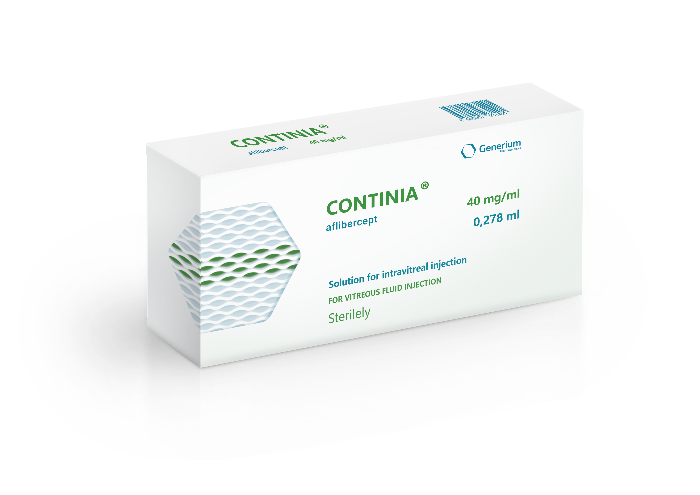
Aflibercept is a recombinant fusion protein and an inhibitor of vascular endothelial growth factor (VEGF), with proven efficacy in international clinical trials and practice. It is used to treat retinal diseases where the underlying pathology involves abnormal neovascularization and increased vascular permeability, leading to edema, degenerative changes, vision impairment, and potential blindness.
Daniil Talyansky, CEO of GENERIUM:
"GENERIUM remains committed to its mission—developing and implementing cutting-edge therapies to save lives and improve health. The introduction of a Russian biosimilar of aflibercept will give thousands of patients a chance to preserve their vision and enhance their quality of life. We are proud to contribute to improving access to global treatment standards."
The Russian biosimilar has four approved indications for patients aged 18 years and older:
- The ‘wet’ form of age-related macular degeneration (AMD)
- Visual impairment due to macular oedema secondary to retinal vein occlusion (branch RVO or central RVO)
- Visual impairment due to diabetic macular edema (DME),
- Visual impairment due to myopic choroidal neovascularization (mCNV).
Continia® is administered via intravitreal injection under local anesthesia in a sterile surgical setting.